A conversation about keys, control and what owning your crypto actually means.
Let me ask you something. When you check your balance on Binance or any other centralised exchange, what exactly are you looking at?
Most people would say "my crypto". It feels true. The number is right there. You bought it. You paid for it. It has your name on it.
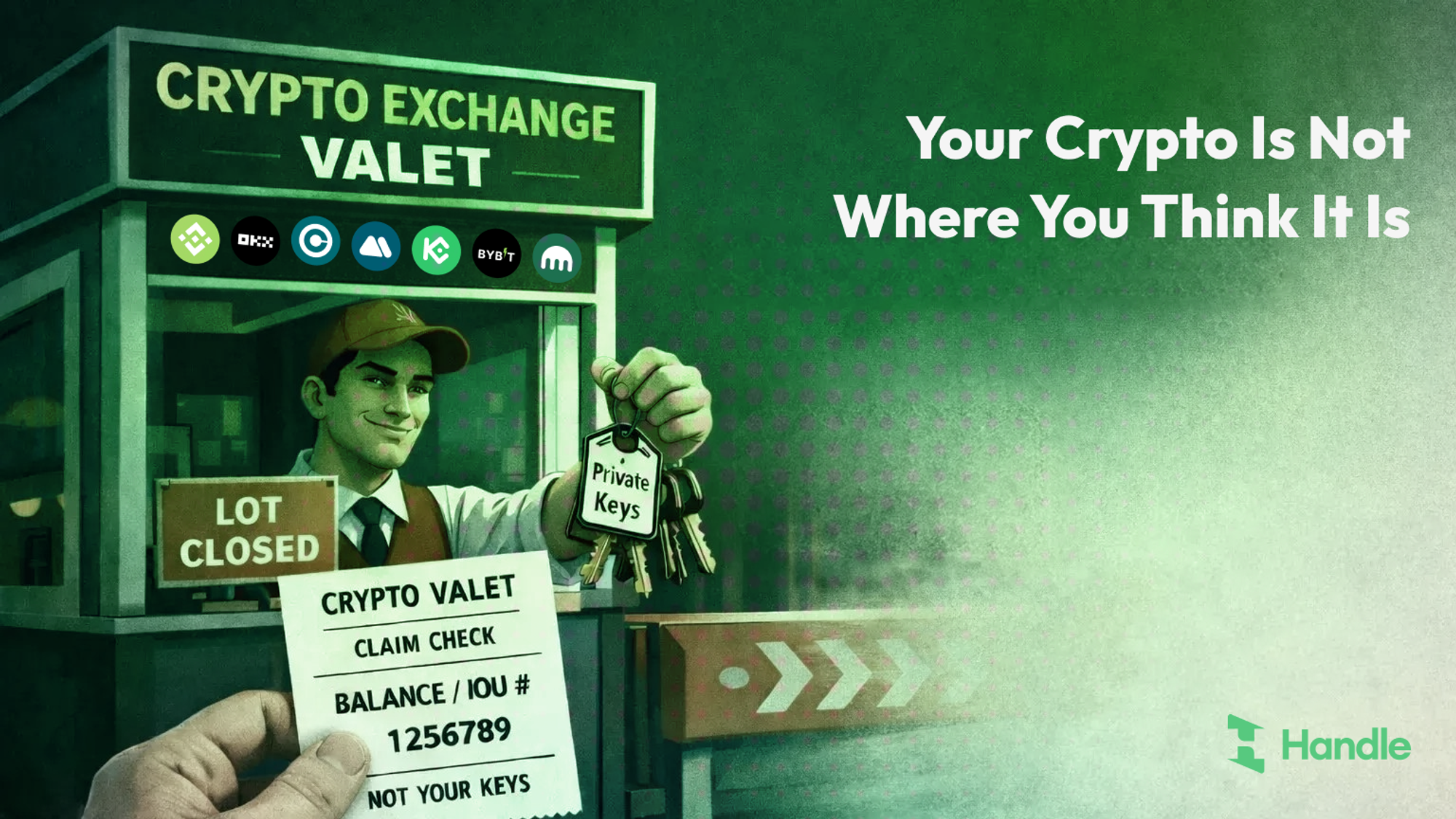
But the number on your screen isn't your crypto. It's a record of what the exchange owes you. The actual tokens, the real assets on the blockchain, sit in the exchange's wallet. The exchange holds the private keys. You hold a promise, an IOU.
That distinction sounds technical until the day it suddenly matters a lot. This is what self-custody is about: real ownership is when you own the wallet.
What does "not your keys, not your crypto" mean?
What did FTX teach everyone the hard way?
In November 2022, millions of people woke up to find they couldn't withdraw their funds from FTX. The app still worked. The balances still showed. But the money was gone. Eight billion dollars disappeared into a bankruptcy court where lawyers would spend years deciding who gets paid first.
The people who lost everything weren't careless. Many were experienced traders who had used FTX for years. They trusted the platform, and that trust cost them.
The same story played out with Celsius, BlockFi and Voyager. Different names, same lesson. When you give someone else control of your keys, you're betting they'll always act in your interest, never make a catastrophic mistake, and never decide to lock you out.
That's a lot to bet on.
Why is an exchange like valet parking?
Think about valet parking. You pull up to a restaurant, hand over your keys and get a little ticket. The car is yours, and you have the receipt to prove it. But right now someone else decides where to park it, whether to move it and when to give it back.
Most of the time this works fine. You get your car back after dinner.
But what if the valet lot suddenly closes? What if the company goes bankrupt between your starter and dessert? What if they simply refuse to return your keys?
You'd never accept those terms for your car. So why accept them for your money?
What is self-custody?
The idea is simple. Instead of letting an exchange hold your crypto, you move it to a wallet where you control the private keys. The tokens move from their address to yours, and from that moment no company stands between you and your assets.
Self-custody isn't a product or a brand. It's the idea that you should hold your own keys, the same way you hold your car keys or house keys.
The catch has always been that self-custody was hard. Traditional crypto wallets make you write down 12 or 24 random words and keep them safe forever. Lose that paper and your money is gone. No recovery, no customer support, no second chances. For most people, that felt scarier than trusting an exchange.
That's why we built HandlePay.
Can self-custody be easy without a seed phrase?
We started HandlePay with a simple question: why should controlling your own money mean memorising seed phrases and living in fear of losing a piece of paper?
The technology to do better exists. Smart account wallets can be secured with Face ID or your fingerprint instead of random words. Your keys stay on your device, and if you lose that device, you can recover your account on a new one by verifying again. No seed phrase to lose. No single point of failure.
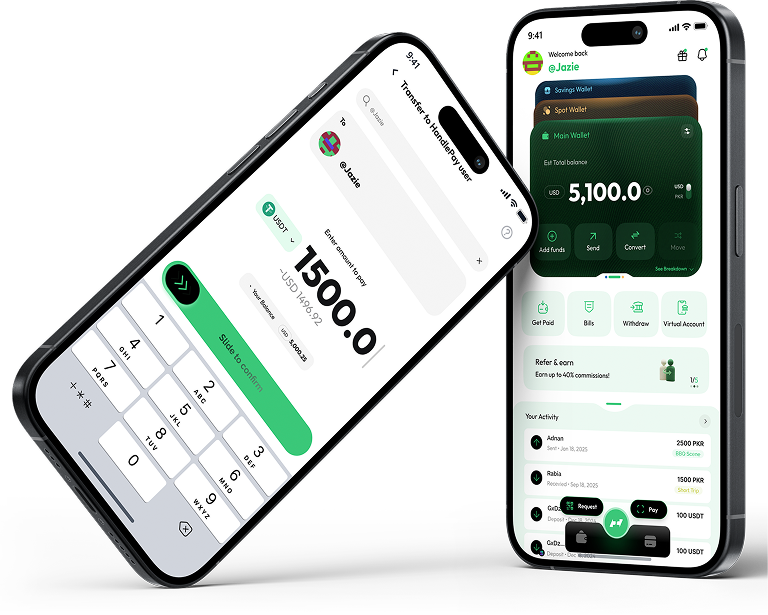
That's what HandlePay offers: real self-custody, where nobody, including us, can touch your funds without your permission, with an experience that feels like the apps you already use. No technical expertise needed, and no panic if your phone falls in the Indus.
What changes when you own the wallet?
Something shifts when you move your assets to a wallet you control. The number on the screen is no longer an IOU or a claim on a company's balance sheet. It's yours.
- No withdrawal approvals. You decide when and where your money moves.
- No platform insolvency risk. If a company fails, your assets don't disappear with it.
- No geographic gatekeeping. Your wallet doesn't check your passport.
That's what ownership is supposed to feel like.
Exchanges serve a purpose: they make it easy to buy crypto in the first place. But once you have it, the question is whether you want to keep trusting someone else with your keys indefinitely. For most people, once they understand what's really happening, the answer is no.
Your keys. Your wallet. Your money.
Own what you've been buying
Create your HandlePay account in seconds, secured by your Face ID or fingerprint.
FAQs
HandlePay Team
Our mission is to make international money work for everyday people, freelancers, and businesses in Pakistan.