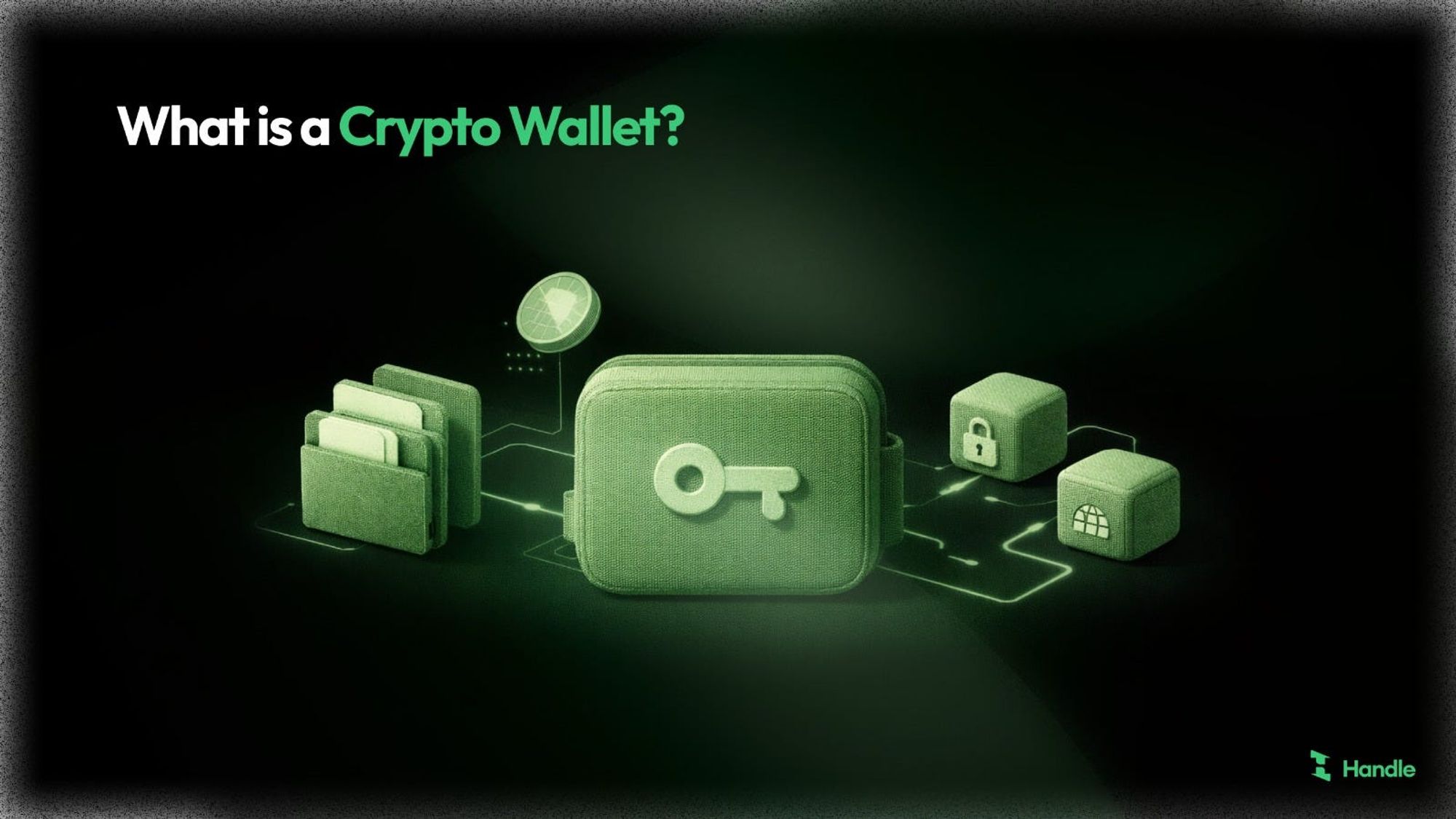
What is a crypto wallet? Think of it the way you think about your phone's screen lock. Your phone doesn't contain the internet; it gives you access to it. In the same way, a crypto wallet doesn't store your money inside it. Your money lives on the blockchain, a global and transparent digital ledger. The wallet holds the keys that prove the money is yours and let you move it.
Understanding how those keys work, and who controls them, is the most important thing to know before you use crypto.
What is a crypto wallet, in simple words?
Who holds the keys: custodial vs non-custodial wallets?
This is the most important distinction in crypto, and it mirrors a choice you already make with traditional money.
Custodial wallets: the "bank" model
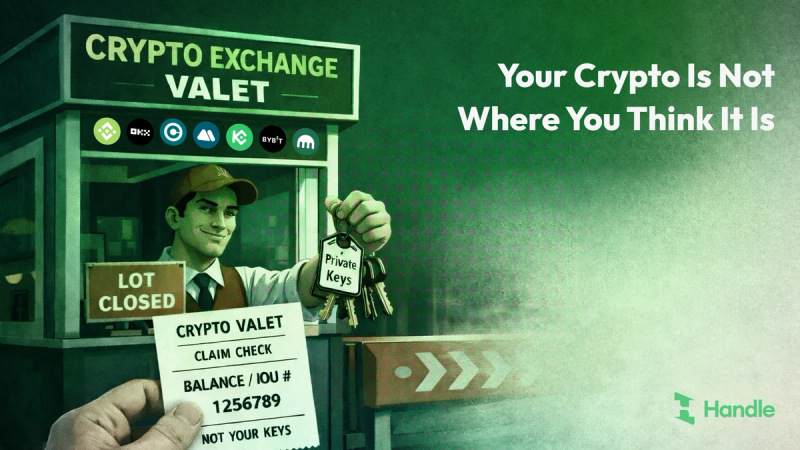
When you use Binance, Coinbase or any other centralised exchange, the platform holds the keys for you. It feels convenient, and there's a password reset if you forget your login. But the trade-off is serious. If the platform goes bankrupt, gets hacked or freezes accounts, your money goes with it. That's exactly what happened when FTX collapsed in 2022, wiping out $8 billion in customer funds. In crypto there's a saying that captures the risk: "Not your keys, not your crypto."
Non-custodial (self-custodial) wallets: the HandlePay model
With a self-custodial wallet, you hold the keys. No company, not even HandlePay, can access, freeze or move your money without your permission. The traditional downside was that if you lost your seed phrase (a set of recovery words), your money was gone forever. HandlePay has solved that, as we explain below.
Where are the keys stored: hot vs cold wallets?
Once you know who holds the keys, the next question is where they're kept.
- Hot wallets are connected to the internet. They're apps on your phone or computer, like MetaMask, Trust Wallet or HandlePay, built for receiving, sending and trading. Fast and accessible.
- Cold wallets are physical devices, like a Ledger or Trezor, kept entirely offline. They're excellent for long-term storage, but impractical for a freelancer who needs to pay for lunch in Jakarta or send money to family in Karachi.
Most people need both: the speed of a hot wallet for everyday use, and the security principles of cold storage for peace of mind. The best products combine both in one experience.
EOA vs smart account wallets: what's the difference?
This is where the crypto experience has changed the most, and where HandlePay stands apart.
EOA (externally owned accounts): the old way
Traditional self-custody wallets like MetaMask or Trust Wallet use an EOA. When you create one, you're given 12 or 24 random words, your seed phrase. You have to write them down and keep them safe. Lose the paper and your money is gone. If someone finds it, your money is theirs. Secure in principle, terrifying in practice.
Smart accounts: the HandlePay way
Smart accounts (built on account abstraction) are the next generation of crypto wallets. Instead of a seed phrase, your wallet is a smart contract that unlocks better features:
- Passkey authentication. Secure your wallet with Face ID or your fingerprint. No 24-word phrase to memorise or lose.
- Easy recovery. Lose your phone, or drop it in the Indus? Your money isn't gone. Your passkey is backed up to your secure cloud, so you can recover your account on a new device by signing in and verifying with Face ID or your fingerprint again.
- Programmable security. Smart accounts can enforce spending limits, ask for extra approval on large transfers, and add protections a basic EOA wallet can't.
Why is HandlePay different?
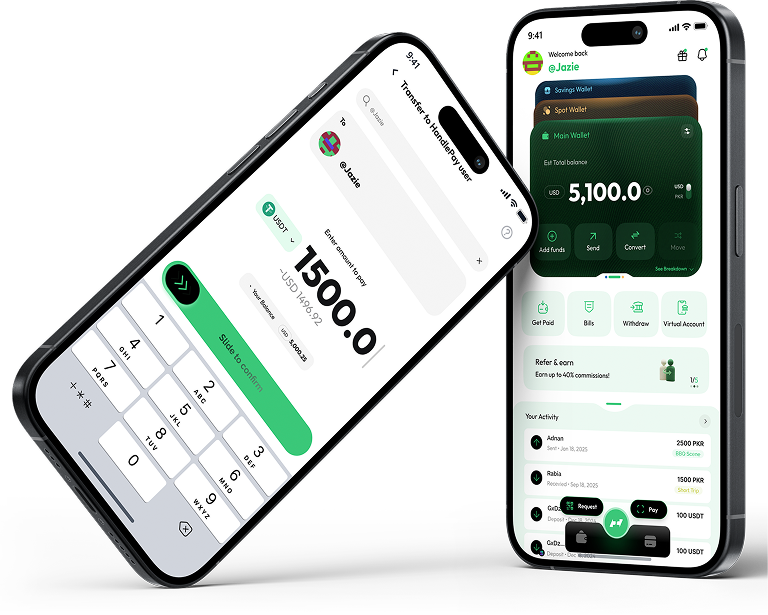
Pakistan's financial apps force a hard choice. Most "easy" apps are custodial: they control your money. Most crypto wallets are self-custodial but too complex for everyday use. HandlePay removes that trade-off with a self-custodial smart account: the security of true ownership, with the simplicity of the apps you already use, unlocked by your face or fingerprint.
The future of money isn't just prices going up and down. It's about ownership. Self-custody used to mean carrying the burden of seed phrases and constant technical worry. With smart accounts and passkeys, you, and only you, can access your money using nothing more than your fingerprint.
Own your money from day one
Create your HandlePay account in seconds, secured by your Face ID or fingerprint.
FAQs
HandlePay Team
Our mission is to make international money work for everyday people, freelancers, and businesses in Pakistan.